1.25 Telescope Eyepiece Review: What Really Matters
Affiliate disclosure: Some links on this page are affiliate links. If you buy through them we earn a small commission at no extra cost to you. This never influences which products we recommend — we only suggest things we'd buy ourselves. Product prices and availability are accurate as of the date published and are subject to change. Always check Amazon for current pricing before purchasing. Learn more.
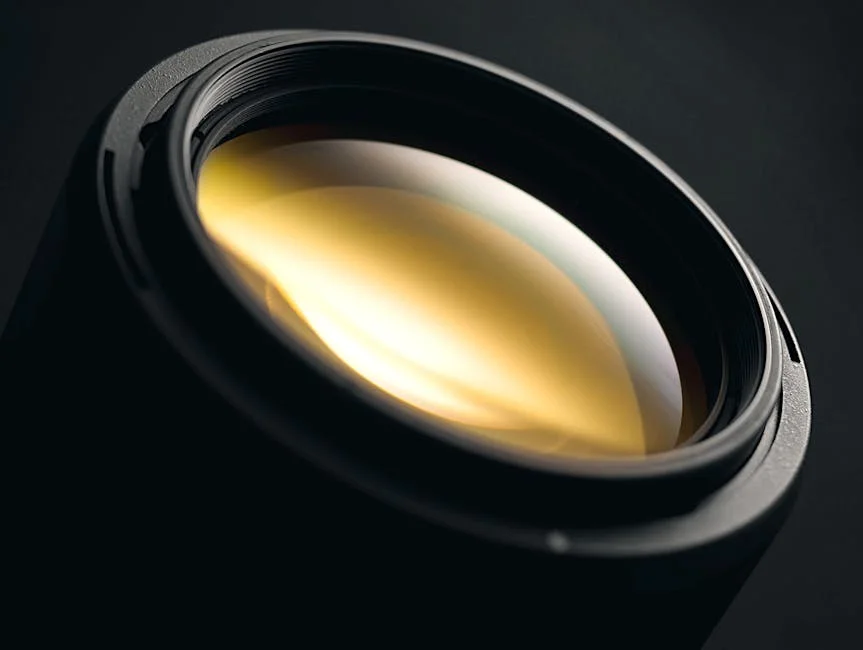
6mm focal length provides high magnification for detailed lunar and planetary observation
See Astromania Telescope Eyepiece 6mm Plo… on AmazonChoosing a 1.25 inch telescope eyepiece is one of the first decisions every observer faces, and one of the most consequential. The 1.25-inch barrel format is the universal standard , compatible with nearly every modern telescope sold today, from entry-level refractors to mid-aperture Dobsonians. Understanding what separates a capable eyepiece from a frustrating one will save you from swapping glass every six months. These eyepieces are where your telescope’s optical chain ends, and that matters.
Focal length, eye relief, coating quality, and mechanical finish all contribute to what you actually see at the eyepiece. A single fixed focal length serves one task well; a set covers the range; a zoom trades some optical purity for flexibility. I’ll work through each of those trade-offs with the three options here.
What to Look For in a 1.25 Inch Telescope Eyepiece
Focal Length and Magnification
Focal length determines magnification when paired with a specific telescope. A 6mm eyepiece in an f/8 telescope delivers around 200x , usable on steady nights for lunar craters and Saturn’s rings. A 20mm eyepiece in the same instrument drops to 60x and shows you a wide star field or the full disk of the Moon without vignetting. Neither is inherently better. The question is what you’re observing and what your atmospheric conditions will support.
Atmospheric seeing is the hard ceiling on usable magnification. A 6mm eyepiece on a turbulent night will show you a boiling, washed-out disk. On a steady night, that same eyepiece can reveal the Cassini Division in Saturn’s rings cleanly. High magnification isn’t wrong , it’s conditional.
Optical Design and Coating Quality
The Plossl design , four elements in two groups , became the workhorse of amateur astronomy in the 1980s and hasn’t been dethroned for mid-magnification use. It delivers a roughly 50-degree apparent field with reasonable eye relief at focal lengths above 10mm. Below 10mm, eye relief compresses, and the exit pupil shrinks, which makes precision eye placement more demanding.
Multi-coating reduces surface reflections on each glass element. Every uncoated air-to-glass surface reflects roughly 4% of incoming light. A four-element eyepiece has eight such surfaces; coatings on those surfaces meaningfully increase contrast, particularly on extended objects like planetary disks and the lunar surface. “Fully multi-coated” means all surfaces carry broadband anti-reflection coatings , this is the spec to look for, not just “coated.”
Eye Relief and Comfort
Eye relief is the distance from the last lens element to the point where your eye must sit to see the full field. At 6mm, Plossl designs typically deliver 5, 6mm of eye relief, which demands a precisely placed eye and becomes uncomfortable during long sessions. At 20mm, eye relief opens up significantly. Eyeglass wearers generally need 15mm or more of eye relief to see the full field without removing their glasses.
Soft rubber eyecups address a real problem: stray light from surrounding sources washing out a faint object. A comfortable, moldable eyecup also steadies your eye position and reduces fatigue. It’s a detail that sounds trivial until you’re standing at the eyepiece at midnight trying to hold a sharp focus on a globular cluster.
Fixed Focal Length vs. Zoom
A fixed focal length eyepiece is optimized for one task. The optical design can be tuned to minimize aberrations at that focal length, which generally produces a sharper, higher-contrast image than a zoom covering the same range. The trade-off is straightforward: you need multiple eyepieces to cover the full useful magnification range of your telescope.
A zoom eyepiece solves the logistics problem , one eyepiece covers the range, one barrel stays in the focuser, and you don’t need a case of glass. The optical cost is real but often overstated. For visual planetary work where you’re hunting the best magnification for the night’s seeing conditions, a zoom’s flexibility is genuinely useful. For the full range of telescope eyepiece options across focal lengths and designs, it’s worth understanding what each format is actually optimized to do before committing to a kit.
Top Picks
Astromania Telescope Eyepiece 6mm Plossl
The Astromania Telescope Eyepiece 6mm Plossl is a single-purpose tool, and it’s honest about that. At 6mm, this eyepiece is optimized for high-magnification planetary and lunar work , not wide-field sweeping, not deep-sky, not general-purpose use. If you know you want to push your telescope’s useful magnification ceiling on nights when the seeing cooperates, this is a direct answer to that need.
The 4-element Plossl design is a known quantity. Fully multi-coated optics mean the contrast budget isn’t being eaten by surface reflections, which matters at planetary magnifications where you’re looking for subtle albedo variations on Jupiter’s cloud bands or the faint shadow of a Galilean moon transiting the disk. I haven’t tested this specific unit under the Milky Way at Salinas Pueblo, but the optical specification is straightforward and the Plossl format at 6mm behaves predictably , the eye relief is short, and you need good atmospheric conditions to get value from the magnification.
The 1.25-inch barrel is standard, compatible with virtually every focuser on the market. The meaningful limitation isn’t compatibility , it’s conditions. A 6mm eyepiece in a light-polluted suburban backyard on a turbulent night will disappoint. Under a stable atmosphere with a decent aperture, it earns its place in the case.
Check current price on Amazon.
Multi-Coated Telescope Eyepiece Set
Three focal lengths in one kit , 4mm, 10mm, and 20mm , cover nearly the full useful magnification range of most amateur telescopes. The Multi-Coated Telescope Eyepiece Set starts at 20mm for wide-field, lower-magnification work: open clusters, large emission nebulae, and whole-disk planetary views early in an observing session. The 10mm lands in the middle range where most general observing happens , comfortably pushing into double stars, lunar detail, and the brighter deep-sky objects. The 4mm pushes hard toward the top of the magnification range on nights steady enough to support it.
The soft eyecups are a practical addition at this price band. They matter more than buyers expect. Lying on the eyepiece and blocking ambient light isn’t optional in a suburban yard, and rubber that actually shapes to your face is more comfortable than a hard plastic rim after thirty minutes at the focuser. Multi-coated optics at this price point suggest reasonable light transmission, though the optical refinement won’t match premium fixed-focal-length alternatives.
This set is the practical starter kit choice , not the last word in optical quality, but a sensible, versatile starting point for a buyer who needs range and can’t justify purchasing five individual eyepieces to build that range one focal length at a time.
Check current price on Amazon.
SVBONY SV135 Zoom Eyepiece
The SVBONY SV135 Zoom Eyepiece covers 7mm to 21mm in a single barrel. That range maps well to the practical observing magnifications most amateurs use in a given session , you can drop to 21mm to find and center a target, then dial up to 7mm to examine it without pulling the eyepiece and fumbling for a replacement in the dark.
The 6-element, 4-group optical design suggests the manufacturer invested more in the optical formula than a minimal zoom approach would require. I haven’t field-tested this specific unit against my Tele Vue Panoptic under dark skies, and I’d defer to Ed Ting’s eyepiece review archive for a rigorous comparative assessment of the SV135’s contrast and edge-of-field sharpness. What the specs describe is a zoom design that aims higher than the basic two-element zoom that frustrates planetary imagers at the short end of the range.
The honest trade-off: at the 7mm end of the zoom range under high magnification, a dedicated fixed 7mm eyepiece optimized for that focal length will likely show tighter stars and better contrast. The zoom earns its place not on ultimate optical performance but on operational convenience , one eyepiece, full range, both hands free, no case required. For observers who move between targets frequently and prefer to stay at the focuser, that’s a genuinely useful trade.
Check current price on Amazon.
Buying Guide
Matching Eyepiece Focal Length to Your Telescope
The magnification an eyepiece delivers depends entirely on your telescope’s focal length. Divide the telescope’s focal length in millimeters by the eyepiece focal length to get magnification. A 1000mm focal length scope with a 10mm eyepiece gives 100x. With a 20mm, it gives 50x. Neither number means anything in isolation , the question is whether that magnification falls within the useful range your aperture and local seeing can support. Start by calculating the lowest useful magnification (aperture in mm divided by 6) and the highest theoretical limit (roughly 50x per inch of aperture) and build your focal length selection from those brackets.
Focal length also affects apparent field of view at the eyepiece , how large the sky window looks. A 20mm Plossl shows roughly 50 degrees of apparent sky; that feels like looking through a porthole. Wide-field designs at 20mm can push 70 degrees or beyond. For star-hopping and locating targets, apparent field matters as much as magnification.
Understanding Optical Coatings
“Coated” on a spec sheet means very little. A single layer of magnesium fluoride on one or two surfaces qualifies. “Fully multi-coated” means all air-to-glass surfaces carry multiple broadband anti-reflection layers , that’s the specification that produces measurably better contrast and light throughput. On a four-element Plossl, the difference between coated and fully multi-coated across all eight surfaces is visible in side-by-side comparisons, particularly on low-contrast targets like Jupiter’s equatorial belts or a planetary nebula against a bright sky background. Treat coating spec as a minimum threshold, not a marketing distinction, when evaluating eyepiece options.
Eye Relief for Eyeglass Wearers
Observers who wear corrective lenses while observing need 15mm or more of eye relief to see the full apparent field without removing their glasses. Short eye relief , common below 10mm in standard Plossl designs , forces you to press your eye close to the lens surface. For eyeglass wearers, that means seeing only the central portion of the field or removing glasses and losing the ability to focus correctly, depending on their prescription. If you wear glasses and plan to observe without removing them, prioritize eye relief in the specification review before focal length.
Building a Practical Focal Length Range
Three focal lengths cover most of what a visual observer needs: a wide-field eyepiece for finding and framing (20, 25mm range), a general-purpose mid-range unit (10, 12mm), and a high-magnification option (6, 8mm) for planetary and lunar work on cooperative nights. A set that spans this range as a single purchase addresses the practical problem directly. Individual eyepiece purchases allow you to optimize each focal length independently , buying the best available unit at each position , but the cost and logistics are higher.
Zoom vs. Fixed for Visual Observers
The fixed-versus-zoom decision is a workflow question more than an optics question. Fixed focal lengths can be optimized for their specific task; they perform well under controlled, unhurried observing. Zooms reward observers who move quickly between targets, dislike swapping eyepieces in the dark, or are evaluating a range of magnifications to find the best view for a given night’s conditions. The optical penalty of a well-designed zoom in the mid-power range is real but modest for visual work , it becomes more significant if you’re using the eyepiece for documentation or electronically-assisted astronomy where contrast differences are measurable.
Frequently Asked Questions
What magnification can I expect from a 6mm eyepiece?
Magnification is determined by dividing your telescope’s focal length by the eyepiece focal length. A 6mm eyepiece in a 900mm focal length telescope delivers 150x; in a 1200mm telescope, it delivers 200x. These are high magnifications that require stable atmospheric seeing to produce sharp images. On turbulent nights, a 10mm or 12mm eyepiece will show you more detail despite the lower power.
Is a zoom eyepiece as good as a fixed focal length?
For most visual observing at mid-power ranges, a well-designed zoom is close enough that the practical convenience outweighs the small optical compromise. At the short end of the zoom range , high magnification, small exit pupil , a premium fixed focal length eyepiece will typically show tighter stars and better contrast. If planetary detail is your primary interest, a dedicated fixed eyepiece at your target magnification is the stronger choice.
Do I need multiple eyepieces, or will one cover everything?
A single eyepiece covers only a narrow slice of the useful magnification range your telescope can deliver. Wide-field views for locating and framing targets, mid-power views for general observing, and high-power views for lunar and planetary work are genuinely different tasks. A three-eyepiece set spanning roughly 20mm, 10mm, and 6mm addresses the full range practically. A zoom eyepiece is a workable single-eyepiece solution if changing focal lengths mid-session is a priority.
Will these eyepieces fit my telescope?
All three options use the 1.25-inch barrel format, which is the industry standard for focusers on the vast majority of modern telescopes. If your telescope’s focuser accepts 1.25-inch eyepieces , which is marked on most focuser drawtube collars or stated in the manual , any of these will fit. The only common exception is a telescope that accepts only 0.965-inch eyepieces, a format found on older or very low-cost instruments.
Does optical coating make a visible difference on budget eyepieces?
Yes, particularly on high-contrast targets. Fully multi-coated optics reduce the reflection loss at each glass surface, which improves contrast on planetary disks, the lunar terminator, and any target where you’re looking for subtle tonal differences. The effect is most visible side-by-side against a single-coated or uncoated eyepiece on targets like Jupiter, where the equatorial belt structure becomes distinctly cleaner with better-coated glass.
Astromania Telescope Eyepiece 6mm Plossl, 1.25 Inch Telescope Accessory Eyepiece Fully Multi Coated 4-Element Plossl: Pros & Cons
- 6mm focal length provides high magnification for detailed lunar and planetary observation
- Fully multi-coated optics enhance light transmission and image contrast
- 1.25 inch barrel size limits compatibility with some modern telescope mounts
Where to Buy
Astromania Telescope Eyepiece 6mm Plossl, 1.25 Inch Telescope Accessory Eyepiece Fully Multi Coated 4-Element PlosslSee Astromania Telescope Eyepiece 6mm Plo… on Amazon