7x50 Binoculars for Astronomy Reviewed and Tested
Affiliate disclosure: Some links on this page are affiliate links. If you buy through them we earn a small commission at no extra cost to you. This never influences which products we recommend — we only suggest things we'd buy ourselves. Product prices and availability are accurate as of the date published and are subject to change. Always check Amazon for current pricing before purchasing. Learn more.

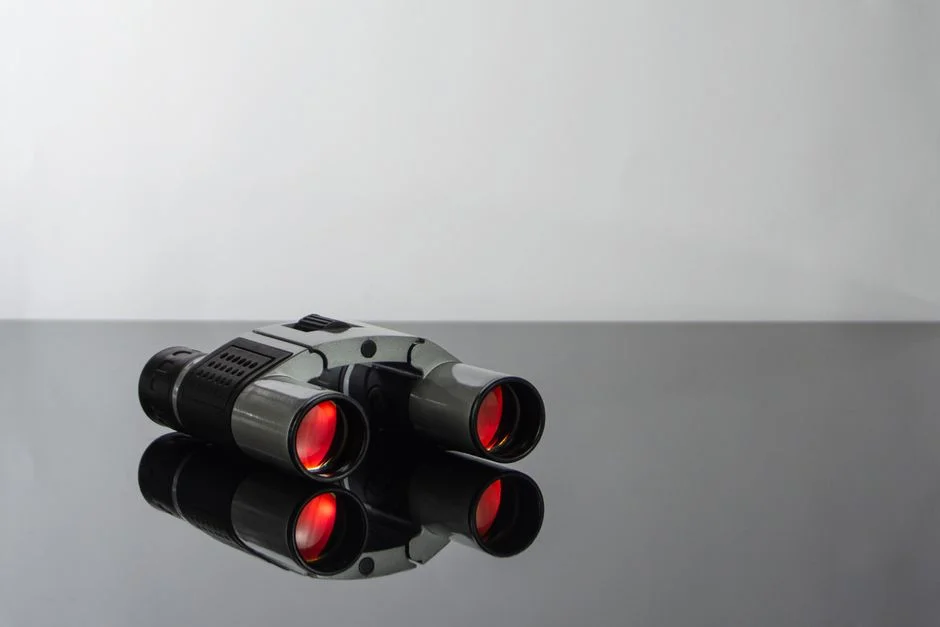
ED glass optics reduce chromatic aberration for clearer viewing
See Celestron – SkyMaster Pro ED 7x50 Bin… on Amazon7x50 binoculars occupy a specific position in the astronomy toolkit , enough aperture to pull in serious light, low enough magnification to keep the field wide and the image steady. For observers who want to use handheld optics under dark skies without lugging a telescope, this configuration has been a practical standard for decades.
The 50mm objective diameter is the key number. At 7x, you get an exit pupil of just over 7mm, which matches a dark-adapted eye nearly perfectly. Before choosing a specific model, it’s worth reading through the broader binoculars landscape to understand how 7x50 fits against other configurations , 10x50, 8x42, and so on. This article covers three mid-range options worth considering.
What to Look For in 7x50 Astronomy Binoculars
Optical Glass Type and Chromatic Aberration
Glass type matters more in astronomy than it does in most other binocular applications. Stars are point sources against a black background , any color fringing around bright objects is immediately visible and distracting. Standard BK-7 or BaK-4 prism glass handles color reasonably well, but extra-low dispersion (ED) glass takes the correction significantly further by reducing secondary spectrum across the field.
For naked-eye objects like the Pleiades, the Beehive Cluster, or the Orion Nebula, the difference is real but not extreme. For bright stars near the edge of the field, or for any observer who is color-sensitive, ED glass is worth the additional investment. Standard fully multi-coated optics without ED glass are perfectly serviceable for most casual use.
Exit Pupil and Dark Adaptation
The 7x50 configuration produces a 7.14mm exit pupil , the diameter of the light beam that actually enters your eye. A fully dark-adapted human eye dilates to roughly 6, 7mm, depending on age. Younger observers benefit most from the full 7mm exit pupil; older observers often find their maximum dilation is closer to 5, 6mm, which means some of the gathered light is wasted at the edge.
This is not a reason to avoid 7x50 binoculars if you are an older observer, but it is useful context. You are still gathering more light per unit of magnification than almost any other common configuration. The exit pupil advantage is most pronounced under genuinely dark skies; under suburban light pollution, the sky background is bright enough that a smaller aperture performs nearly as well.
Prism Type and Coating Quality
BaK-4 (barium crown glass) prisms are the standard reference for quality porro-prism binoculars. They have a higher refractive index than BK-7, which means the full aperture of the objective lens is used and vignetting at the edge of the field is reduced. Look for fully multi-coated optics , meaning all air-to-glass surfaces have multiple anti-reflection coatings, not just the objective lenses.
Phase correction coatings, typically found on roof-prism designs, are less relevant for porro-prism binoculars. The porro geometry handles phase without a separate coating. What matters for porro-prism 7x50s is coating completeness: fully multi-coated across all surfaces, not merely “multi-coated” on the outer elements. The label distinction is worth reading carefully in the product spec before purchasing.
Waterproofing and Dew Resistance
Astronomy happens at night, when dew point drops and humidity rises. A pair of 7x50 binoculars that fogs internally the first time you bring them from a warm car to cold night air is useless within twenty minutes. O-ring sealed, nitrogen-purged construction is not a luxury feature for astronomy use , it is a practical requirement.
The full range of binoculars worth considering for outdoor use all share this construction. If a 7x50 model does not specify waterproof and fogproof construction, assume it is not, and expect condensation problems during temperature transitions common to evening observing sessions.
Top Picks
Celestron SkyMaster Pro ED 7x50
The Celestron SkyMaster Pro ED 7x50 is the only model in this comparison built with ED glass, and for astronomy use that distinction is significant. ED objectives reduce chromatic aberration at the glass level rather than relying entirely on coating corrections, which means stars at the edge of the field hold tighter and color fringing on bright objects is noticeably reduced. I haven’t used this specific model personally, but based on the optical specification and Celestron’s track record with this design series, the ED element placement is doing real work here , it’s not a marketing label on glass that would otherwise perform identically.
The 50mm aperture delivers the expected light-gathering advantage, and the 7x magnification keeps the field wide enough to frame large objects like the Andromeda Galaxy or the Double Cluster without needing to sweep. The trade-off is weight. ED glass elements add mass, and the SkyMaster Pro line has never been light. Extended handheld sessions will tire out most observers; a tripod adapter is not optional for sessions longer than a few minutes.
For an observer whose primary use is astronomy from a fixed location or with a parallelogram mount, this is the choice I’d point to in the mid-range price band. The optics are doing the most technically correct work of the three options here.
Check current price on Amazon.
Bushnell H2O 7x50
The Bushnell H2O 7x50 leads with a practical credential that matters specifically for astronomy: it is waterproof and fogproof by construction, with O-ring sealing and nitrogen purging. That is not a trivial detail. Dew is one of the most consistent problems with any optic used in the field at night, and a sealed interior that won’t fog when temperatures drop is worth significant consideration independent of the optical specification.
BaK-4 prisms and fully multi-coated optics are present here, which places the Bushnell H2O above a standard budget build. The optical performance is honest mid-range , adequate contrast on open clusters, reasonable edge sharpness, no ED correction. For observers whose use spans birding, marine, and occasional astronomy, this is a capable all-around instrument. For dedicated astronomy use where optical performance is the primary criterion, the lack of ED glass is a real limitation next to the Celestron SkyMaster Pro ED.
The durability profile makes the H2O worth considering for anyone who observes in environments where moisture exposure is routine , coastal sites, humid climates, or sessions that extend past midnight when dew settles heavily. It is not the sharpest option here, but it is arguably the most durable.
Check current price on Amazon.
Nikon ACULON A211 7x50
Nikon’s ACULON A211 7x50 represents the most widely available option in this comparison, and the brand carries genuine optical credibility. The ACULON line is Nikon’s entry point, and the A211 at 7x50 performs accordingly , competent glass, multi-coated optics, and a 7x magnification that keeps the field comfortable for scanning the Milky Way or sweeping along the ecliptic.
The manual focus adjustment is a genuine consideration. For observers accustomed to center-focus binoculars with quick adjustment, individual eyepiece focus takes more deliberate setup. Once set for your eyes, it holds well, but casual observers or those who share binoculars with others of different vision will find the adjustment slower. This is standard construction for marine-grade 7x50 designs, and Nikon makes no bones about the ACULON A211’s positioning as an accessible, durable instrument rather than a premium one.
For a first pair of 7x50 binoculars , someone who wants to try the configuration before committing to a more expensive instrument , the A211 is a reasonable starting point. The Nikon optical chain is reliable at this aperture and magnification, even without ED glass or premium coatings.
Check current price on Amazon.
Buying Guide
Tripod Compatibility Is Not Optional
Handheld 7x50 binoculars are workable for short scans. For actual observation of faint nebulae, star clusters, or anything requiring sustained attention, a stable mount changes the experience entirely. All three options reviewed here accept standard tripod adapters through a threaded port, but confirm the adapter is included or available before purchasing.
A parallelogram binocular mount is the preferred solution for astronomy , it allows you to move between zenith and horizon without releasing the tripod head, which matters when tracking objects across the sky. It is an additional cost, but observers who attempt sustained astronomy use without one typically find the fatigue frustrating enough that it limits how much time they actually spend observing.
Optical Performance Tiers in This Price Band
Mid-range 7x50 binoculars span a meaningful performance range. ED glass at the top of the mid tier (the Celestron SkyMaster Pro ED) produces materially better chromatic correction than standard glass. Fully multi-coated optics without ED glass (Bushnell H2O, Nikon ACULON A211) are close behind in overall image brightness but trail on color fidelity for point sources.
For most observers doing casual Milky Way sweeping, Messier hunting, or naked-eye comet observation, the difference is real but not dramatic. For observers who are color-sensitive or who plan to spend significant time on bright star fields, the ED correction is worth the investment. Understanding where each model sits within the binoculars tier helps calibrate expectations before purchase.
Waterproofing for Night Use
Night observing sessions involve specific environmental conditions that daytime binocular use typically does not: falling temperatures, rising humidity, and extended exposure to dew. An unsealed instrument brought from a warm indoor environment to cold outdoor air will experience internal condensation.
The Bushnell H2O addresses this directly with O-ring sealing and nitrogen purging. The Celestron SkyMaster Pro ED and Nikon ACULON A211 specifications should be verified for waterproof rating before purchase. If your observing site involves regular dew, coastal air, or humid summer nights, construction quality on sealing deserves equal weight with optical specification.
Eye Relief and Eyeglass Compatibility
Standard eye relief on 7x50 binoculars is typically 15, 20mm. Observers who wear glasses while observing need a minimum of approximately 15mm to see the full field of view without vignetting at the edges. Check the specified eye relief value before purchasing if you observe with glasses on.
Twist-up eyecups allow observers without glasses to position the eye at the correct distance from the ocular lens. Most mid-range 7x50s include adjustable eyecups. The mechanism quality varies , rubber roll-down eyecups are durable; twist-lock mechanisms offer more precise positioning but can wear over time.
Size and Weight Realism
A 7x50 binocular in the mid-range tier weighs approximately 900, 1,100 grams depending on construction and glass type. That is a significant instrument to hold steady for any length of time. Observers who have used 8x42 or 10x42 binoculars should expect noticeably more mass.
This is not a reason to choose a smaller configuration if aperture and field width are priorities , it is a reason to budget for a mount. The weight also affects carry convenience; if you are walking to a dark sky site with other equipment, the 7x50 class is not the most packable choice.
Frequently Asked Questions
Are 7x50 binoculars actually better for astronomy than 10x50?
For many observers, yes. The lower magnification produces a larger exit pupil , approximately 7.1mm versus 5mm at 10x , which better matches a fully dark-adapted eye. The wider field of view at 7x makes it easier to frame large objects like open clusters and the Andromeda Galaxy. At 10x, image shake becomes a more significant problem without a tripod, and the narrower field requires more deliberate panning to scan.
How much does the lack of ED glass actually matter in astronomy?
It matters most on bright objects against dark sky backgrounds, where color fringing on stars is most visible. For sweeping the Milky Way or observing diffuse nebulae, standard fully multi-coated optics perform well. The Celestron SkyMaster Pro ED 7x50 is the only model here with ED correction; the practical difference is noticeable on bright stars and at the field edge, less so on extended objects.
Can I use 7x50 binoculars for birdwatching as well as astronomy?
Yes, with some trade-offs. The 7x50 is heavy for extended handheld birding use, and the minimum focus distance is longer than compact or mid-size birding binoculars. The Bushnell H2O 7x50 is specifically marketed for birding and marine use alongside astronomy, and its waterproof construction makes it more practical for field conditions. For dedicated birding, an 8x42 is generally more comfortable; the 7x50 rewards astronomy use more than the other direction.
Does the Nikon ACULON A211 7x50 require individual focus adjustment?
Yes. The A211 uses individual eyepiece focus rather than a central focus wheel. Each eyepiece is adjusted separately and then locked. For observers with similar vision in both eyes who observe solo, this is not a practical problem once set correctly.
Do I need a tripod to use 7x50 binoculars for astronomy?
For sustained observing, yes. Short sweeps and naked-eye scanning are manageable handheld, but holding a 900, 1,000 gram instrument at the sky for any length of time introduces fatigue-driven shake that obscures faint objects. A standard camera tripod with a binocular adapter works adequately; a parallelogram mount is significantly more comfortable for extended sessions and worth the additional cost if you plan to observe regularly.
Celestron – SkyMaster Pro ED 7x50 Binocular – Astronomy Binocular with ED Glass – Large Aperture for Long Distance: Pros & Cons
- ED glass optics reduce chromatic aberration for clearer viewing
- Large 50mm aperture enables excellent light gathering ability
- Large aperture and magnification make binoculars heavier and less portable
Where to Buy
Celestron – SkyMaster Pro ED 7x50 Binocular – Astronomy Binocular with ED Glass – Large Aperture for Long DistanceSee Celestron – SkyMaster Pro ED 7x50 Bin… on Amazon