Canon Astrophotography Camera Buyer's Guide: RF vs EF

Affiliate disclosure: Some links on this page are affiliate links. If you buy through them we earn a small commission at no extra cost to you. This never influences which products we recommend — we only suggest things we'd buy ourselves. Product prices and availability are accurate as of the date published and are subject to change. Always check Amazon for current pricing before purchasing. Learn more.
Quick Picks
Canon EOS R8 Mirrorless Camera Body, Full‑Frame CMOS Sensor, 24.2Megapixels, 4K 60p Video, Dual Pixel AutofocusII,
Full-frame CMOS sensor captures excellent light sensitivity for night sky
Buy on AmazonCanon EOS Rebel T7 DSLR Camera EF-S 18-55mm f/3.5-5.6 is II Lens Kit, 24.1 Megapixel CMOS (APS-C) Sensor, Full HD
24.1 megapixel sensor captures high-resolution detail
Buy on AmazonCanon EOS Rebel T7 DSLR Camera Double Zoom Lens Kit with EF-S 18-55mm and EF 75-300mm Lenses, 24.1 Megapixel CMOS
Dual zoom lenses provide versatile focal length range of 18-300mm
Buy on Amazon| Product | Price Range | Top Strength | Key Weakness | Buy |
|---|---|---|---|---|
| Canon EOS R8 Mirrorless Camera Body, Full‑Frame CMOS Sensor, 24.2Megapixels, 4K 60p Video, Dual Pixel AutofocusII, best overall | $$ | Full-frame CMOS sensor captures excellent light sensitivity for night sky | Body-only purchase requires separate lens investment for astrophotography | Buy on Amazon |
| Canon EOS Rebel T7 DSLR Camera EF-S 18-55mm f/3.5-5.6 is II Lens Kit, 24.1 Megapixel CMOS (APS-C) Sensor, Full HD also consider | $$ | 24.1 megapixel sensor captures high-resolution detail | Entry-level kit lens limits low-light astrophotography performance | Buy on Amazon |
| Canon EOS Rebel T7 DSLR Camera Double Zoom Lens Kit with EF-S 18-55mm and EF 75-300mm Lenses, 24.1 Megapixel CMOS also consider | $$ | Dual zoom lenses provide versatile focal length range of 18-300mm | Kit lenses typically have slower maximum apertures for low-light astrophotography | Buy on Amazon |
| Canon EOS R100 Mirrorless Camera RF-S18-45mm F4.5-6.3 is STM Lens Kit, 24.1 Megapixel CMOS (APS-C) Sensor, 4K Video, also consider | $$ | 24.1 megapixel APS-C sensor captures high resolution detail | F4.5-6.3 aperture limits light gathering for deep-sky astrophotography | Buy on Amazon |
Most people searching for a canon astrophotography camera have already decided on the brand , they want to know which body to buy and whether their existing glass is going to work under a dark sky. Those are the right questions. Canon’s RF and EF ecosystems give beginners and serious imagers genuinely different entry points, and sorting that out matters more than spec-sheet comparisons. The full range of astrophotography equipment decisions starts with the camera body, but it doesn’t end there.
Sensor size, mount compatibility, and maximum aperture of whatever lens you’re pairing all affect your results more than any single camera spec. Understanding those factors before you buy will save you from an expensive mismatch.
What to Look For in a Canon Astrophotography Camera
Sensor Size and Light Sensitivity
The sensor is where astrophotography starts and ends. A full-frame sensor has a larger photosite area than an APS-C crop sensor, which means it collects more photons per unit of time at equivalent ISO settings. For deep-sky work , galaxies, nebulae, anything faint and diffuse , that light-gathering advantage is real and measurable, not marketing language.
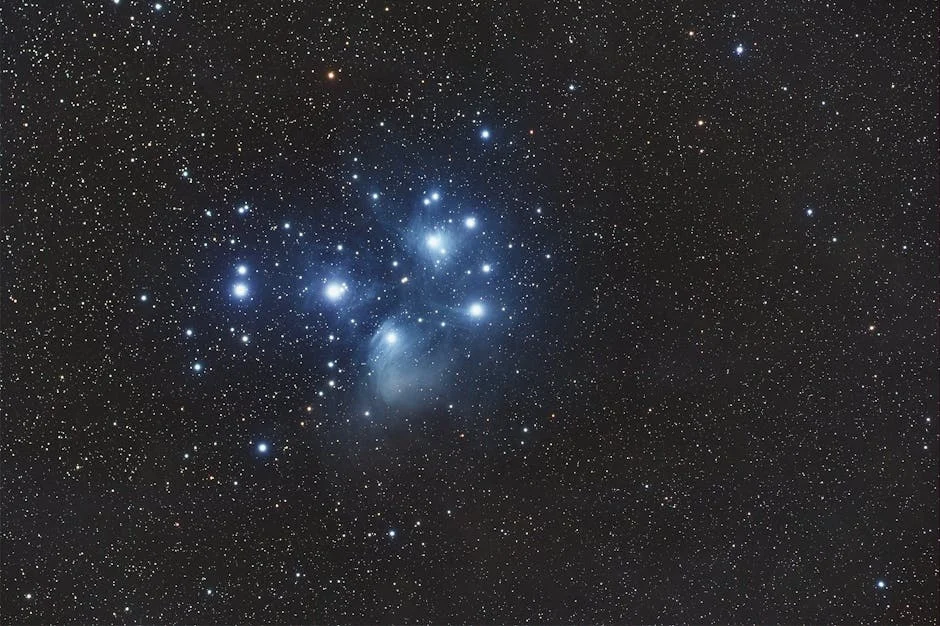
APS-C sensors are not disqualifying. Most beginners start on crop sensors and produce serious work. The trade-off is that you’ll typically need longer exposures or higher ISO to achieve equivalent signal-to-noise, and high ISO amplifies read noise. If your primary targets are brighter objects , the Orion Nebula, the Pleiades, wide Milky Way fields , an APS-C body handles that work well.
The practical question is whether you’re planning to grow into faint targets. If yes, full-frame is worth the investment. If you’re testing whether astrophotography holds your interest, a crop-sensor body is the rational starting point.
Aperture and Lens Compatibility
Sensor size determines your light ceiling; lens aperture determines how fast you hit it. Fast lenses , f/2.8 and faster , gather significantly more light per second than kit lenses in the f/4.5, f/6.3 range. For astrophotography, the difference between f/2.8 and f/5.6 is two full stops, meaning you’d need four times the exposure time with the slower lens to match the signal.
Kit lenses included with entry-level bodies are designed for general photography in adequate light. They’re optically reasonable, but their aperture limitations make them a bottleneck for night sky work. If you’re serious about imaging faint objects, plan your lens budget alongside your body budget. Canon’s RF and EF mount ecosystems both offer fast prime lenses that pair well with these bodies.
Mirrorless vs. DSLR
This distinction matters for astrophotography in practical ways beyond the usual photography debates. Mirrorless cameras offer a live electronic view of the sensor output, which makes composing and focusing at night , where you’re manually focusing on stars , genuinely easier. The electronic viewfinder shows you amplified real-time sensor signal in darkness, not an optical path that requires ambient light to be useful.
DSLRs have a proven track record for astrophotography and benefit from a larger ecosystem of compatible accessories and lenses, including third-party and legacy glass. The optical mirror mechanism is not a liability; many serious imagers shoot DSLR. But for a buyer starting fresh today, the mirrorless live view advantage for night focus and composition is worth considering.
Exploring the complete range of astrophotography gear options , including mounts, filters, and tracking equipment , alongside your camera choice is worth the time before you commit to a system.
Manual Controls and Long-Exposure Capability
Any camera Canon makes will shoot in manual mode and handle bulb exposure , that’s not a differentiator. What matters is how intuitive the controls are in darkness, whether the body supports an external intervalometer or has one built in, and how well the menu system handles settings you’ll access repeatedly: ISO, shutter speed, mirror lockup on DSLRs, long-exposure noise reduction toggle.
Entry-level bodies simplify menu structures in ways that can frustrate methodical shooters. If you’re planning to work through a checklist of settings on every session, a body with dedicated physical controls for ISO and exposure mode earns its keep.
Top Picks
Canon EOS R8 Mirrorless Camera Body
The Canon EOS R8 Mirrorless Camera Body is the answer for buyers who want full-frame performance without stepping into Canon’s higher-tier RF bodies. The 24.2-megapixel full-frame CMOS sensor is the reason to consider this camera over anything else in Canon’s mid-range lineup , full-frame sensors collect more light, produce cleaner high-ISO files, and give you more dynamic range to recover shadow detail in post-processing.
I haven’t owned this body, but based on the specs and Canon’s sensor performance history, the full-frame advantage here is genuine. At high ISO settings that night sky imaging demands, a full-frame CMOS outperforms APS-C alternatives from the same generation. The Dual Pixel Autofocus II system is largely irrelevant for deep-sky still imaging where you’re manually focusing on stars, but the 4K 60p video capability is useful if you’re planning to capture lunar motion, ISS transits, or time-lapse sequences.
The body-only format is a real consideration. You need to bring your own glass, and for this sensor to perform at its ceiling, you want something fast. A slow kit lens paired with a full-frame body is a bottleneck , the sensor is capable of more than a slow lens will allow it to deliver. Budget for a fast prime alongside this body and the combination earns its place as the strongest all-around Canon astrophotography platform in this price range.
Check current price on Amazon.
Canon EOS Rebel T7 DSLR Camera with 18-55mm Lens Kit
The Canon EOS Rebel T7 DSLR Camera with EF-S 18-55mm kit lens is the most common first astrophotography camera on the market, and there’s a practical reason for that. It’s a known quantity. Canon’s DSLR ecosystem is mature, the T7 has extensive documentation, and if something goes wrong in the field, answers exist.
The 24.1-megapixel APS-C sensor is capable for wide-field Milky Way work and brighter deep-sky targets. For a first attempt at the Orion Nebula or a Milky Way arch over a dark horizon, this sensor handles the task. The limitation is the included 18-55mm f/3.5, 5.6 kit lens , at the long end of that zoom range, you’re at f/5.6, which is slow for faint-target imaging. For wide-field work at 18mm and f/3.5, it’s more usable.
The honest assessment: this is a competent beginner DSLR that will teach you the process of astrophotography , polar alignment, focusing on stars, exposure stacking , without requiring a large investment. The upgrade path is clear: same mount, faster prime lens, and you’ve got a materially better imaging system without replacing the body.
Check current price on Amazon.
Canon EOS Rebel T7 Double Zoom Lens Kit
The Canon EOS Rebel T7 Double Zoom Lens Kit adds the EF 75-300mm telephoto alongside the 18-55mm, and for lunar and planetary imaging that longer reach is immediately useful. The 300mm end gives you a frame-filling moon shot without a dedicated telescope, and for a buyer who wants to start with both wide-field and telephoto targets, the dual-lens configuration covers that range from the start.
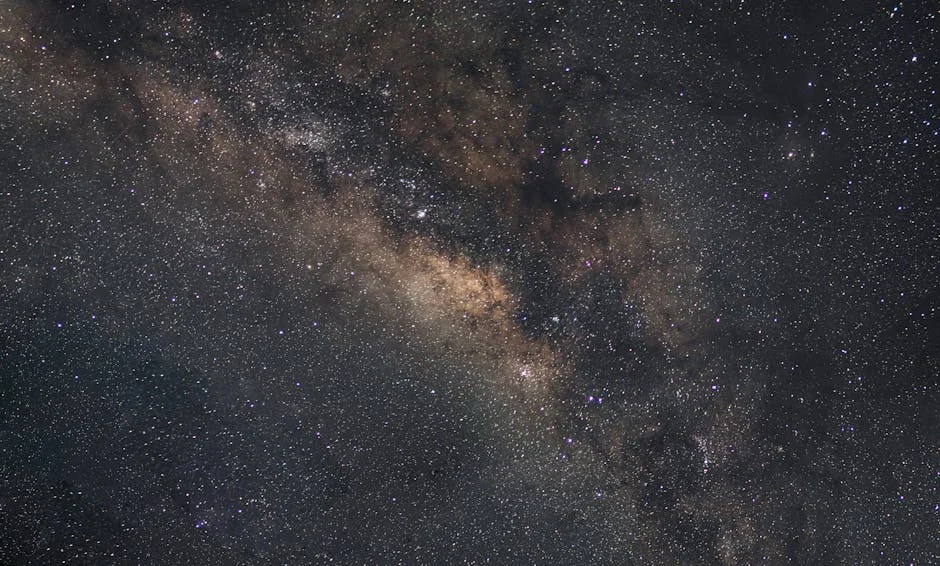
The aperture trade-off is real at both ends. The 75-300mm runs f/4.5, 5.6 across its range, and at 300mm you’re at f/5.6 , slow enough that bright targets like the moon and brighter star clusters are practical while faint deep-sky objects are not. Understand that boundary before you buy. This kit is strong for lunar imaging, star trails, and wide Milky Way compositions. It is not the right configuration if your primary goal is faint nebulae or galaxy detail.
For a buyer who explicitly wants to shoot the moon, capture a few bright clusters, and photograph the Milky Way on a single trip without carrying multiple separate lenses, the dual-kit configuration makes sense. It does those tasks without additional lens purchases.
Check current price on Amazon.
Canon EOS R100 Mirrorless Camera with RF-S 18-45mm Lens Kit
The Canon EOS R100 Mirrorless Camera is Canon’s entry point into the RF mirrorless ecosystem, and the included RF-S 18-45mm lens gets a buyer into the RF mount without a separate lens purchase. At 24.1 megapixels on an APS-C sensor, the resolution is competitive with the Rebel T7 on paper.
The practical limitation for astrophotography is the kit lens. The RF-S 18-45mm f/4.5, 6.3 is a slow lens, and at f/6.3 on an APS-C sensor, you’re working against the physics. For brighter targets and wide-field Milky Way photography at the 18mm end, it’s workable. For anything faint, you need a faster lens , which means an additional investment on top of the body kit.
The R100 makes sense if your priority is getting into the RF ecosystem now, with the intention of adding a fast RF or RF-S prime as your imaging expands. The mirrorless live view advantage for focus and composition at night is real, and this body provides that at an accessible entry point. Treat the included kit lens as a learning tool rather than your permanent astrophotography optic, and the platform makes sense long-term.
Check current price on Amazon.
Buying Guide
Matching Your Targets to Your Sensor
The first purchase decision is whether your primary targets are bright or faint. Bright targets , the moon, Jupiter, Saturn, the Orion Nebula at its core, the Pleiades , are accessible on any Canon body with any lens at moderate ISO settings. Faint targets , galaxy arms, emission nebulae, globular cluster resolution , demand more light and lower read noise. Full-frame sensors give you more of both. If you’re starting with bright targets and testing your interest, an APS-C body is the rational choice. If you already know faint deep-sky is your goal, start with full-frame and avoid the mid-path upgrade.
Lens Aperture Is the Variable You Control
Camera bodies don’t depreciate your images the way slow glass does. A fast prime lens , f/2.8 or faster , paired with an entry-level APS-C body will outperform a slow kit lens on a full-frame body at equivalent exposures. This is physics, not preference. Before deciding on a body, determine what lens you’re pairing with it. If the answer is a kit lens, budget your expectations for faint targets accordingly. If the answer is a dedicated fast prime, the body sensor tier becomes the primary differentiator. The complete picture of astrophotography system building , body, lens, mount, and tracking , matters more than any single component spec.
DSLR vs. Mirrorless for First-Time Astrophotographers
Both systems work. DSLRs offer a larger existing ecosystem of compatible EF lenses, including legacy glass that covers wide apertures at accessible prices. Mirrorless bodies offer live electronic view, which simplifies night focus and composition when you’re manually targeting a dim star. If you own EF glass already, a DSLR is a natural extension of that investment. If you’re starting without existing glass, mirrorless RF gives you the newer system with a longer future roadmap. Either choice gets you to working astrophotography images.
Tracking Mounts and Exposure Length
No Canon body changes the single biggest constraint in astrophotography: Earth’s rotation. Without a tracking mount, stars trail at exposures longer than roughly 20 seconds at typical focal lengths. With a tracking mount , even a simple star tracker , you can expose for minutes rather than seconds, which transforms what a mid-range sensor can capture. The camera body choice matters less than whether you’re tracking. A tracked 30-second sub-frame on an entry-level APS-C body shows dramatically more signal than an untracked 30-second frame on a full-frame body. Factor the cost and complexity of tracking into your total system budget.
EF vs. RF Mount Compatibility
Canon’s RF mount is the current mirrorless standard. EF is the legacy DSLR mount. EF lenses work on RF mirrorless bodies with the Canon EF-EOS R adapter , that compatibility exists and is reliable. RF lenses do not work on EF DSLR bodies. If you own EF glass and are considering moving to a mirrorless body like the R8 or R100, your glass investment carries forward with the adapter. If you’re starting from scratch, RF gives you the current ecosystem with the longer product life ahead.
Frequently Asked Questions
Is a Canon DSLR or mirrorless better for astrophotography?
Both formats produce strong astrophotography results, and the choice depends more on your existing lens inventory than the body format itself. Mirrorless bodies provide a live electronic view of the sensor signal in darkness, which makes manual star focus more precise and intuitive. DSLR bodies offer access to a wider range of compatible EF lenses, including older fast primes at accessible prices. For a buyer starting without any existing glass, mirrorless RF offers the more current ecosystem and a longer upgrade path.
How does the Canon EOS R8 compare to the Rebel T7 for night sky imaging?
The primary difference is sensor size and system architecture. The Canon EOS R8 uses a full-frame sensor that collects more light and produces cleaner high-ISO files than the APS-C sensor in the Canon EOS Rebel T7. At equivalent ISO settings and exposure times, the full-frame sensor will show more faint detail and less noise. The T7 is a capable beginner camera; the R8 is the better tool for buyers who intend to pursue faint deep-sky targets.
Can I use a Canon Rebel T7 for Milky Way photography?
Yes. The 24.1-megapixel APS-C sensor in both T7 configurations handles wide-field Milky Way photography competently. At 18mm on the kit lens and f/3.5, you’re working at a usable aperture for 20-second untracked exposures under a dark sky. The sensor noise at ISO 3200, 6400 is manageable with stacking in post-processing.
Does the Canon EOS R100 kit lens work for astrophotography?
The RF-S 18-45mm f/4.5, 6.3 kit lens included with the Canon EOS R100 is a genuine limitation for faint deep-sky targets. At f/6.3, light gathering is slow enough that long exposures and a tracking mount become near-mandatory for acceptable signal. For bright targets , the moon, wide Milky Way arches at the 18mm end , the lens is workable. For anyone planning to image faint nebulae or galaxies, the R100 body paired with a faster RF prime is a more capable configuration than the kit lens allows.
Do I need a tracking mount with any of these Canon cameras?
For exposures beyond roughly 15, 25 seconds at typical astrophotography focal lengths, Earth’s rotation causes stars to trail , and no camera body eliminates that physics. A tracking mount aligns to the celestial pole and counteracts Earth’s rotation, allowing exposures measured in minutes rather than seconds. The result is dramatically more signal from faint targets with the same sensor. None of these Canon bodies includes tracking.
Where to Buy
Canon EOS R8 Mirrorless Camera Body, Full‑Frame CMOS Sensor, 24.2Megapixels, 4K 60p Video, Dual Pixel AutofocusII,See Canon EOS R8 Mirrorless Camera Body, … on Amazon